In a continuous processing line, materials are constantly moving: sheet metal, strips, tubes and profiles travel at high speeds as they are cut, fed, shaped and packaged without ever interrupting the flow. The control system makes all this possible by enabling motors, sensors and machines to communicate in real time, ensuring that every operation takes place at the right moment and in the correct position. Anyone already working with this type of equipment knows that the difference between an efficient production line and one that wastes materials and time always comes down to automatic control.
The Basic Principle: Synchronisation Between Material and Machine
Almost all the applications we are discussing are based on the same concept: synchronisation. The system continuously reads the position and speed of the material, usually through an encoder, and controls the motors of downstream machines so that they move according to this reference.
In flying shear applications, for example, the shear must reach the same speed as the material, perform the cut while both are moving together, and then return to its starting position for the next cycle, all without slowing down the production line.
The control system manages a motion profile that includes:
Acceleration, which brings the shear up to the material’s speed;
Synchronisation phase, during which the cut takes place;
Deceleration and return, which prepare the machine for the next cycle within the time available between cuts.
The quality of the result depends on how accurately the system follows this profile. This determines cutting length precision, edge quality and compliance with tolerances, as well as the ability to change lengths or formats without stopping production.
The Metalworking Industry
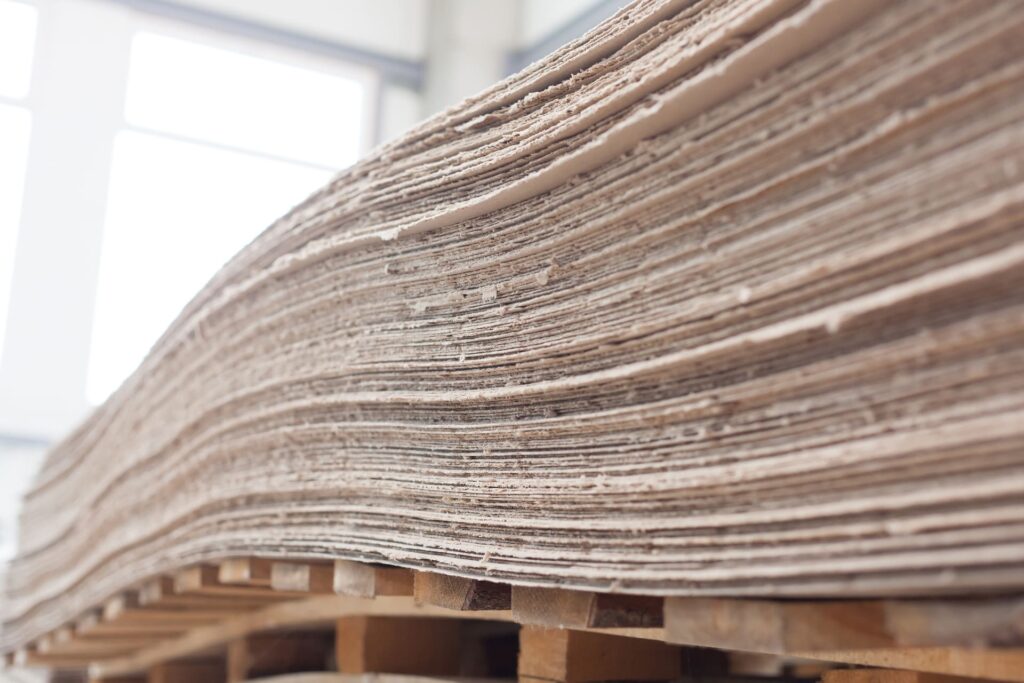
Flying and Rotary Shears for Sheet Metal
These are the machines where flying cutting delivers the greatest benefits. Digitec handles the control of linear, rotary and orbital shears and cutting machines, with extensive experience also in tilting shears. Each configuration presents different challenges for the control system.
Linear shears. A carriage follows the material along a section of its travel path and then returns to its starting position. The control system must manage the recovery phase effectively, as this determines the minimum cutting length achievable at a given line speed.
Rotary shears. The blade rotates continuously, and a cut is performed with each revolution. The blade’s peripheral speed must be synchronised with the material speed, while the cutting length is adjusted by changing the ratio between the two.
Orbital shears. These combine the movement of the blade and the carriage into a trajectory that follows the material during cutting, delivering performance suited to high operating speeds.
Tilting shears. These require specific control of the tilting movement.
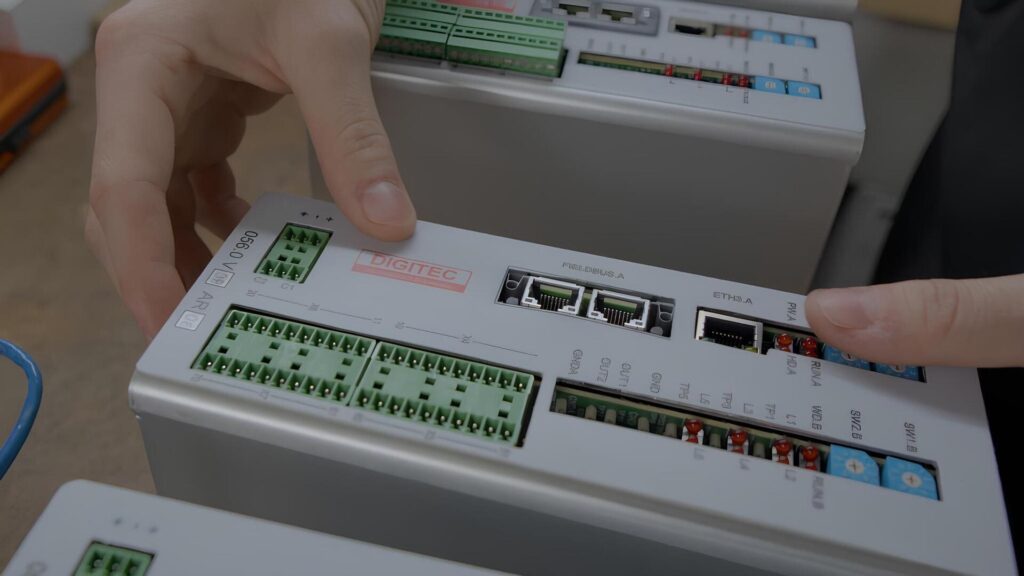
Control can be entrusted either to controllers developed by Digitec or to commercially available motion control devices, with the most suitable solution selected for each individual installation.
Feeders: Precision in Material Feeding
Feeders supply material to downstream machines, such as presses or processing lines, using predefined feed lengths. A feeder control system must ensure:
Feed length repeatability, guaranteeing the same feed distance in every cycle;
High dynamic performance, since each cycle is very short in high-speed production;
Coordination with the machine being fed, so that material feeding is completed when the machine is ready to receive it.
Poorly controlled feeders force production cycles to slow down or generate positioning errors that result in scrap. A well-designed control system, on the other hand, makes it possible to increase productivity without compromising quality.
Slitting Lines: Longitudinal Cutting and Strip Management
In slitting lines, the metal strip is divided into several narrower strips. In these systems, the control system coordinates the line axes and ensures smooth material transfer between the different sections. Consistent speeds and strip stability have a direct impact on the quality of the finished strips and on process continuity.
Beyond Machine Control: The Factors That Make the Difference
Two Software Levels
Level 1: Automation software and HMI, responsible for direct machine control and the interface through which the operator manages the equipment.
Level 2: Software that connects the machines on the production line with the company’s management systems.
With Level 2 software, production orders can be sent directly to the line over the network, without requiring an operator to enter them manually. In a production department where processing requirements change frequently, this means fewer data-entry errors, shorter setup times and improved production traceability.
Energy Efficiency
For machines with high dynamic performance, involving frequent acceleration and braking, Digitec provides a system that recovers energy during braking and stores it in capacitor banks. Instead of being dissipated, this energy remains available for subsequent operating phases, resulting in significant energy savings.
This technology is part of the company’s commitment to environmental sustainability, which also involves the adoption of energy-efficient solutions.
From the First Meeting to Technical Support: The Digitec Process
Digitec’s approach consists of seven stages:
Initial meeting with the customer to analyse requirements and propose the most suitable solutions;
Definition and validation of technical and functional specifications;
Design and manufacture of electrical equipment;
Level 1 automation and HMI software development;
Level 2 software development for data exchange between offices and production facilities;
Testing, commissioning and training;
After-sales support.
The company provides a complete turnkey solution, covering analysis, design, manufacturing, installation of electrical control panels and cables, connections and wiring, commissioning, technical support and training.
Technical support is available worldwide, either at the customer’s premises or remotely, to resolve malfunctions and minimise intervention times.
If you are considering a new production system, upgrading an existing line or optimising a process that is currently slowing down production, the starting point is always your manufacturing cycle: materials, line speeds, formats, required tolerances and integration with company management systems.
Contact Digitec for an initial technical consultation: together, we will analyse your production line’s requirements and identify the most suitable control solution.